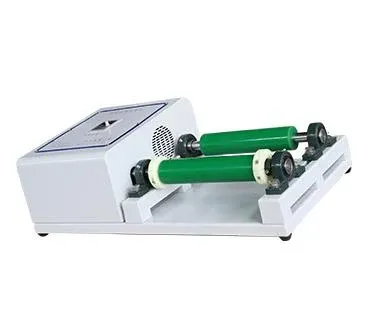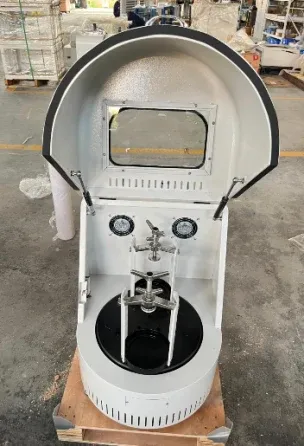
Ball Mills
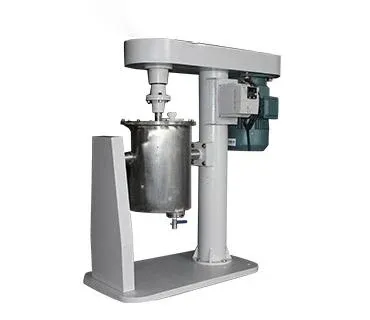
Stirred Ball Mill, ZLS Series 1–600L
ZLS series stirred ball mills from 1L laboratory units to 600L industrial machines: discharge down to ≤1 µm, 0.37–22 kW, frequency-controlled agitator speed, for nano grinding, dispersion and fine powder production.
Specifications
- Series
- ZLS stirred ball mills
- Capacity
- 1–600 L
- Discharge Size
- ≤1 µm
- Feed Size
- ≤5 mm (laboratory) to ≤20 mm (industrial)
- Power
- 0.37–22 kW (model dependent)
- Speed Regulation
- Frequency converter
- Chamber Materials
- Stainless steel, Polyurethane, Alumina ceramic lining, PTFE lining
- Grinding Media
- Zirconia beads, glass beads, stainless steel beads, ceramic beads
- Operation
- Batch or continuous; wet and dry
- Voltage
- Customizable (220V/380V, 50/60Hz)
The mill for fine grinding at production scale
Planetary mills own the laboratory, but production asks a different question: how do you hold a sub-micron specification across hundreds of litres, shift after shift? The stirred ball mill answers it with a stationary chamber and a driven agitator. The agitator keeps the entire media charge in motion, so the slurry sees continuous shear and impact instead of the dead zones of a rotating drum — and fine grinding stays uniform at volumes where other designs give up.
The ZLS series runs from a 1L laboratory machine to a 600L industrial unit, with discharge down to 1 µm or finer across the range.
One platform from lab result to plant output
Process development fails when the production machine behaves nothing like the laboratory one. The ZLS range is built as one family: the 1L, 2L and 3L units run at 50–1400 rpm on 0.37 kW for formulation work, mid-range machines cover pilot batches, and the industrial models up to 600L carry 200L of material per batch on up to 22 kW. The grinding principle, media behaviour and control logic stay the same as you scale, so the recipe you prove at the bench is the recipe the plant runs.
Agitator speed is frequency-controlled on the laboratory and mid-range models, which makes energy input a process parameter you can record and repeat, not a habit of the operator.
Built around your material, not a standard slurry
Chamber options include stainless steel, polyurethane and alumina ceramic or PTFE linings, and the media charge can be zirconia beads for high-purity work, glass or stainless beads, or ceramic beads. Feed sizes run from 5 mm on laboratory models to 20 mm on the industrial range, and both batch and continuous operation are supported, wet or dry.
The machines serve the processes that live on fine particles: pigments and coatings, ceramics and electronic materials, battery and magnetic materials, chemical and pharmaceutical production, and fine mineral powders. Voltage is customizable for your plant's supply.
Where the running cost is decided
In stirred milling, the media and the energy bill dominate lifetime cost, and both are set by matching the machine to the duty. An oversized chamber wastes energy on every batch; an undersized one runs endless hours at its limit. The correct specification starts from your throughput, feed size and target discharge, which is why we ask for those three numbers before quoting a model.
Send us your material, daily throughput and target particle size, and we will recommend the ZLS model, chamber material and media charge for your line — starting, if you prefer, with a laboratory unit to prove the process before the production machine is specified.