Grinding Guides
Matching Ball Mill Jars and Grinding Media: A Practical Guide
Jar and media are one grinding system, not two purchases. Material pairing, size ratios and charge levels that keep fineness high and contamination out.
Two purchases that behave like one machine
Buyers usually meet the jar and the grinding media in different catalogues, on different quotations, sometimes from different suppliers. Inside the mill, they are a single system. The jar decides what the media can touch; the media decides what the jar must survive; together they decide your fineness, your contamination and how long either of them lasts. Mismatched pairs are behind a large share of the grinding problems that get blamed on the mill itself: cracked jars, media that wears in weeks, samples that pick up elements nobody ordered.
This guide sets out the matching logic in the order it should be applied: material pairing first, then media size against jar and feed, then charge level, then the working habits that keep a good pairing good.
Rule one: the jar must be at least as hard as the job
The media strikes the jar wall as often as it strikes the sample. If the media is much harder than the jar, the wall becomes part of the grind — wearing into the product and thinning toward failure. The working rule is simple: jar hardness should meet or exceed media hardness, and the classic pairings exist because they obey it.
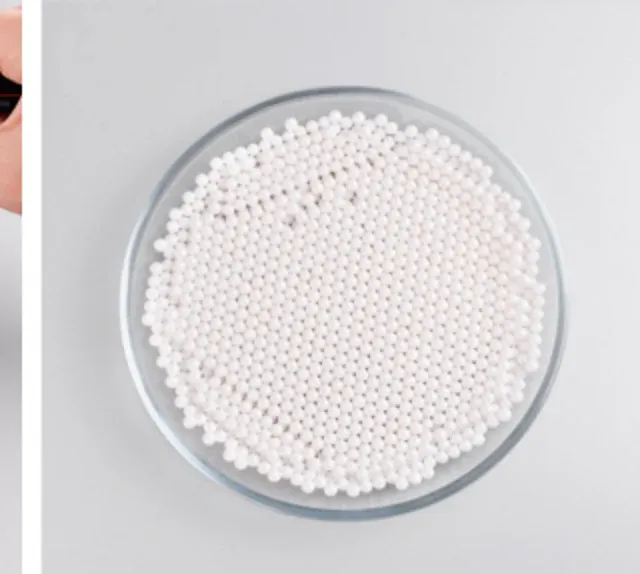
Zirconia balls belong in zirconia jars for the highest-energy, lowest-contamination work: same material family, Mohs hardness 9 on both sides of the impact, nothing foreign entering the sample. Alumina balls pair with alumina (corundum) jars the same way. Agate balls in agate jars serve analytical work where silica chemistry is acceptable and metal is not. Tungsten carbide media demands tungsten carbide jars; anything softer is a consumable, not a container.
Steel is the instructive exception. Stainless balls in stainless jars are a legitimate general-purpose pair for tough, contamination-tolerant work — but the pair sheds iron together, which is precisely why it is banned from battery, pharmaceutical and analytical duties. The pairing is never just mechanical; it is a contamination decision made in advance.
Softer jars — nylon, polyurethane, PTFE — pair with gentler duty: lighter media, mixing and soft materials, and processes where metal contact is forbidden and impact energy is low. Running dense zirconia media hard in a polymer jar converts the jar into a slow ingredient of your product.
Rule two: media size answers to feed, target and jar together
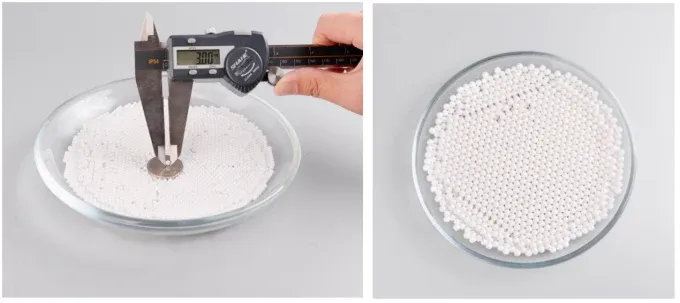
Media size selection usually starts with the powder, and our companion guide on choosing zirconia media covers that logic: large media to break coarse feed, fine media — down to 0.1 mm and 0.3 mm micro beads — to finish. The jar adds two constraints that buyers forget.
The first is proportion. Media should be small relative to the jar's internal diameter so the charge can cascade and circulate; a jar barely wider than its largest balls does not grind, it rattles. In planetary jars especially, leave room for the charge to move — the energy comes from motion, not from packing.
The second is the lid and seal. Fine media finds gaps that coarse media never tests. If your process steps down to micro beads, the jar's sealing must be rated for them, or the finest fraction of your charge will migrate into seals and threads, wearing both and contaminating the next batch.
A practical size ladder for a single jar: start the charge with the size that breaks your feed, and where the specification demands a fine finish, plan a second stage with a finer charge rather than forcing one size to cover the whole range. Mixed-size charges inside one jar are a compromise with a wide distribution as its price.
Rule three: charge level is a setting, not a habit
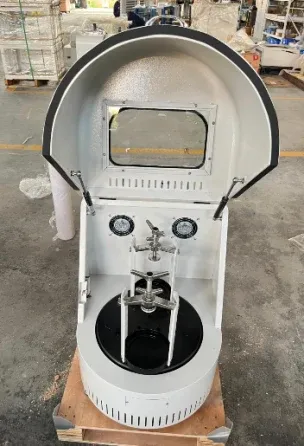
How much media, how much material, how much empty space — the three fractions of the jar decide whether the charge cascades, cataracts or simply slides. The widely used starting point for jar milling is media at roughly a third to a half of the jar volume, material filling the voids between the media, and enough headspace for the charge to move. On roller mills, sample loading up to two-thirds of the jar volume is the stated ceiling on our GQM machines, with media counted inside that working volume.
Overfilling is the commonest quiet fault. A jar packed to the brim cannot accelerate its media, so impact energy collapses and the run produces heat and time instead of fineness. Underfilling wastes the jar and lets media strike wall with nothing in between, accelerating wear on both. When a process suddenly performs worse after a staff change, check the charge level before checking anything else; it is the variable most likely to have drifted.
For stirred mills the same logic wears different numbers — media fill is a large share of the chamber and material flows through it — but the principle holds: the ratio is a process parameter, recorded with the recipe, not left to whoever loads the machine.
Working habits that protect the pairing
Four habits decide whether a well-matched system stays matched. Never run a jar dry and empty at speed: media on bare wall is the fastest way to damage both. Ramp speed up rather than switching straight to maximum, especially with dense media in ceramic jars. Clean jar and media as a set between materials, and keep dedicated jar-and-media sets for contamination-critical products — the set is the unit of purity, not the individual part. Finally, inspect on a schedule: weigh the media charge periodically, because its mass loss is your contamination, quantified; a charge that has lost significant weight has told you exactly where it went.
Special cases worth naming
Three situations bend the standard rules without breaking them. Air-sensitive materials — metal powders and sulfides that oxidise or even ignite in air — need vacuum jars or sealed jars that can be filled with inert gas; the pairing logic stays the same, but the jar must be the vacuum-rated version of the material you chose, and media handling happens under the same protection as the jar loading. Cryogenic and heat-sensitive work argues for shorter runs and programmed pauses rather than a different pairing. And very abrasive feeds shorten every component's life; there, the correct response is the hardest available pairing on both sides and a weighing schedule tight enough to catch wear before it becomes contamination.
A pairing table to start from
For high-purity fine grinding: zirconia jar, zirconia media. For analytical samples where silica is acceptable: agate jar, agate media. For the hardest materials and mechanical alloying: tungsten carbide on both sides. For general tough duty without purity limits: stainless on both sides. For soft materials and metal-free gentle work: polymer jar with light media and modest speeds. Every row obeys the same two principles — hardness matched, chemistry chosen deliberately.
If your current setup breaks one of the rules in this guide, that is likely your problem, and it is usually the cheapest grinding problem you will ever fix.
Tell us what is in your mill now
Send us your mill model, jar material and size, current media, and the material you grind. We will check the pairing, the size ladder and the charge level, and recommend the jar and media set that turns them back into one system — including when the honest recommendation is to change only one side of the pair.